
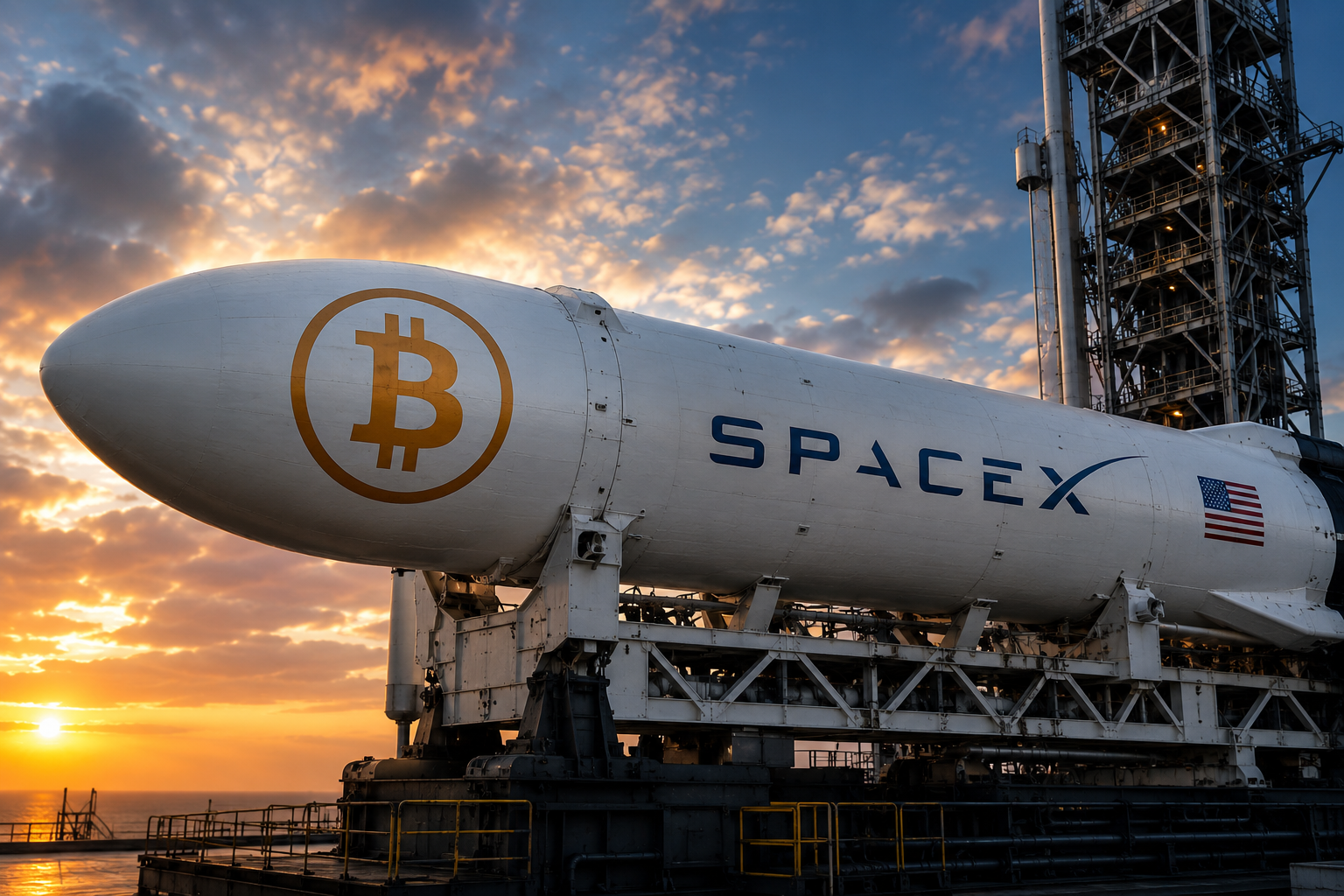
SpaceX has disclosed holding 18,712 Bitcoin worth about $1.5 billion in its newly filed IPO paperwork, revealing a much larger crypto position than previously estimated by blockchain analytics firms.
According to SpaceX’s S-1 registration statement filed with the US Securities and Exchange Commission, the Elon Musk-led aerospace company accumulated its Bitcoin holdings at an average purchase price of roughly $35,320 per coin.
At current market prices, the treasury allocation places SpaceX among the largest corporate Bitcoin holders globally, behind firms such as Strategy.
Fresh details from the filing also showed the company held the Bitcoin at a fair value of $1.3 billion as of March 31, while Bitcoin’s recent rally has pushed the value closer to $1.5 billion.
The latest SEC filing showed SpaceX holds substantially more Bitcoin than Tesla’s 11,509 BTC reserve, while also far exceeding earlier estimates from BitcoinTreasuries.NET and crypto analytics firm Arkham, both of which had pegged the company’s holdings at 8,285 Bitcoin.
The disclosure arrived alongside SpaceX’s confirmation that it plans to go public in what could become the largest initial public offering in capital markets history.
Reports suggest the company could seek a valuation between $1.5 trillion and $2 trillion, potentially putting it alongside firms such as Apple, Microsoft, and NVIDIA by market value if the upper range is achieved.
The specific timing and cost tracking in the S-1 filing illustrate that SpaceX has treated Bitcoin as a long-term capital asset.
Even though the Wall Street Journal reported accounting write-downs on the value of their crypto assets in prior years due to market downturns, the IPO paperwork shows the company chose to hold through market cycles.
This resilience indicates that the asset was integrated into their overarching macroeconomic outlook, giving the company an asymmetric upside that has paid off handsomely at current market valuations.
IPO could reshape SpaceX’s Bitcoin play
Once public, however, SpaceX may face tougher scrutiny over how it manages digital assets on its balance sheet.
In the private arena, Musk had near-absolute authority to allocate capital toward volatile digital assets without public accountability.
Post-IPO, SpaceX will be bound by stricter corporate governance, a fiduciary duty to public shareholders, and intense scrutiny from institutional investors.
Large asset managers who are highly risk-averse will likely push back against expanding a volatile crypto treasury, meaning the hurdle for the company to purchase additional Bitcoin in the near future is exceptionally high.
The path toward further accumulation is also complicated by the strict accounting rules governing public companies.
Although accounting standards have evolved to allow corporations to report digital assets at fair market value, the inherent volatility of cryptocurrency still introduces massive fluctuations into a company’s reported net income and balance sheet health.
Public market investors generally prefer predictable, transparent cash flows, especially for a capital-intensive aerospace company that needs billions of dollars to fund Starship development and Starlink launches.
Adding more volatility to the balance sheet could artificially suppress the stock price, making a buy decision counterproductive to the primary goals of going public.
Conversely, the probability of SpaceX selling a portion or all of its Bitcoin holdings is notably higher than the probability of them buying more.
Going public is fundamentally an exercise in maximising liquidity and optimisation.
If SpaceX faces massive capital expenditure requirements for its Mars exploration program or global satellite deployment, its board may view the $1.4 billion-plus Bitcoin stash as an easy piggybank to liquidate for cash.
Using Bitcoin to fund core operational engineering projects is highly justifiable to Wall Street, whereas sitting on speculative digital assets while simultaneously burning cash on rocket development could frustrate mainstream institutional shareholders.
Tesla’s historical financial playbook offers a clear template for how SpaceX might behave regarding a future sale.
Tesla famously purchased $1.5 billion in Bitcoin in 2021, only to liquidate roughly 75% of it later to prove liquidity and shore up cash reserves during operational crunches.
Because Musk manages both companies with similar treasury frameworks, it is highly likely that SpaceX views its Bitcoin holdings as a highly liquid cash equivalent.
If market conditions tighten, or if the post-IPO valuation demands a cleaner balance sheet, a strategic, partial divestment to lock in profits from their $35,320 cost basis would be a logical and highly probable move.
Ultimately, SpaceX is preparing to enter a new era of corporate maturity where its Bitcoin treasury will be a polarising focal point for investors.
While crypto-friendly tech investors will view the holding as a visionary, forward-thinking treasury strategy, traditional Wall Street analysts will likely view it as an unnecessary risk variable.
Whether SpaceX chooses to hold, sell, or buy, the presence of 18,712 Bitcoin on its S-1 filing ensures that the company’s financial narrative will remain uniquely linked to the broader digital asset economy.
The post Could SpaceX sell its 18,712 Bitcoin after going public? appeared first on Invezz