
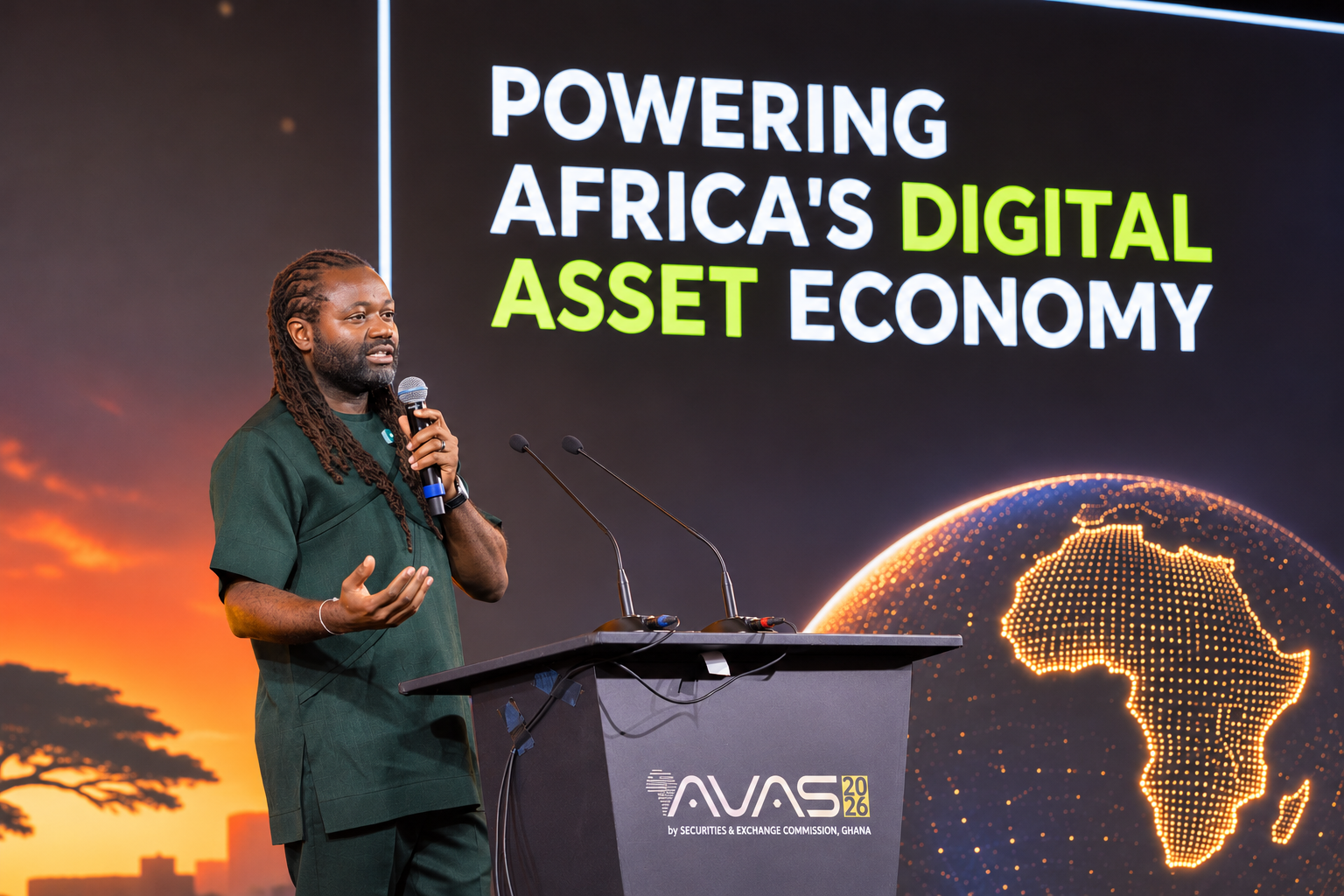
WhiteBIT wants Ghana’s crypto conversation to move past trading.
The global cryptocurrency exchange, part of the W Group fintech ecosystem, used the AVAS 2026 Summit to argue that digital assets should start doing practical work for businesses, banks and the wider economy.
WhiteBIT is the summit’s headline sponsor. On stage, Ghana Country Manager Fred Frimpong pointed to uses that go well beyond buying and selling tokens: international payments, real-world asset tokenisation, property ownership verification and capital markets.
The company already has a foothold in the local system.
In March 2026, Ghana’s Securities and Exchange Commission (SEC) admitted WhiteBIT Ghana into its virtual asset regulatory sandbox.
“Crypto adoption is only the beginning. The real opportunity for Ghana lies in exploring how digital assets can support businesses, expand access to investment, and make financial services more efficient. Achieving this requires not only technology but also collaboration between industry participants, financial institutions, and regulators,” said Frimpong.
WhiteBIT serves around 10 million users worldwide.
Across all its businesses, from trading and blockchain infrastructure to payments and financial services, W Group reaches more than 40 million.
Why Ghana has become a key crypto market in Africa
Ghana’s crypto economy hit $5.1 billion in the year to June 2026, Chainalysis says in its 2026 Geography of Cryptocurrency Report. That’s 80% more than the year before.
Ghanaians traded more on both centralised and decentralised exchanges.
Zoom out to sub-Saharan Africa and the total climbs to $101 billion, a 13.4% annual rise.
The International Monetary Fund’s September 2026 report adds to the picture.
It placed Ghana fifth among the region’s crypto markets and estimated that 8% to 17% of the population has bought or sold digital assets.
Yearly crypto transactions come to roughly $21 billion.
Higher usage brings its own problem, though. Most activity still centres on trading and stablecoins.
Tokenised assets and blockchain services for institutions remain at an early stage, and turning raw adoption into useful financial services is the harder task.
How tokenisation and blockchain payments could work in Ghana
Frimpong explored several ways, with two examples highlighted below.
The first involved trade. In his scenario, an importer in Accra buys goods from a supplier in Istanbul.
Settlement can take three to five business days, and currency conversion can eat up to 10% of the payment.
Blockchain-based payments could shorten that wait, cut costs, and free up working capital sooner.
WhiteBIT offers institutional trading, OTC liquidity, and digital asset payment infrastructure that could support this kind of flow.
The second example covered real-world asset tokenisation, where ownership rights in a physical asset are recorded as digital tokens.
With fractional ownership, someone could put as little as GHS 500 into commercial real estate.
Gold and cocoa could work the same way, opening new routes for financing and investment.
Frimpong’s example started with an importer in Accra paying a supplier in Istanbul.
That payment can take three to five business days to settle, and currency conversion can cost up to 10% of the amount.
Moving it over blockchain rails could cut the wait and the fees. The importer would also have that cash available again sooner.
Where Ghana’s digital asset market goes from here
WhiteBIT sees Ghana as a place to pair its international technology with local partners.
As the country’s rules take shape, the industry faces a clear test: showing that rising crypto use can produce services that help businesses grow and bring more people into the financial system.
The post WhiteBIT urges utility-driven crypto growth as Ghana builds regulatory framework appeared first on Invezz